












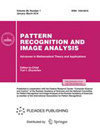
PATTERN RECOGNITION AND IMAGE ANALYSIS
期刊介绍
The purpose of the journal is to publish high-quality peer-reviewed scientific and technical materials that present the results of fundamental and applied scientific research in the field of image processing, recognition, analysis and understanding, pattern recognition, artificial intelligence, and related fields of theoretical and applied computer science and applied mathematics. The policy of the journal provides for the rapid publication of original scientific articles, analytical reviews, articles of the world's leading scientists and specialists on the subject of the journal solicited by the editorial board, special thematic issues, proceedings of the world's leading scientific conferences and seminars, as well as short reports containing new results of fundamental and applied research in the field of mathematical theory and methodology of image analysis, mathematical theory and methodology of image recognition, and mathematical foundations and methodology of artificial intelligence. The journal also publishes articles on the use of the apparatus and methods of the mathematical theory of image analysis and the mathematical theory of image recognition for the development of new information technologies and their supporting software and algorithmic complexes and systems for solving complex and particularly important applied problems. The main scientific areas are the mathematical theory of image analysis and the mathematical theory of pattern recognition. The journal also embraces the problems of analyzing and evaluating poorly formalized, poorly structured, incomplete, contradictory and noisy information, including artificial intelligence, bioinformatics, medical informatics, data mining, big data analysis, machine vision, data representation and modeling, data and knowledge extraction from images, machine learning, forecasting, machine graphics, databases, knowledge bases, medical and technical diagnostics, neural networks, specialized software, specialized computational architectures for information analysis and evaluation, linguistic, psychological, psychophysical, and physiological aspects of image analysis and pattern recognition, applied problems, and related problems. Articles can be submitted either in English or Russian. The English language is preferable. Pattern Recognition and Image Analysis is a hybrid journal that publishes mostly subscription articles that are free of charge for the authors, but also accepts Open Access articles with article processing charges. The journal is one of the top 10 global periodicals on image analysis and pattern recognition and is the only publication on this topic in the Russian Federation, Central and Eastern Europe.
该杂志的宗旨是出版高质量的同行评审的科学和技术材料,介绍图像处理、识别、分析和理解、模式识别、人工智能领域的基础和应用科学研究成果,以及理论和应用计算机科学和应用数学的相关领域。该刊的政策规定迅速出版原创科学文章、分析评论、世界主要科学家和专家经编辑委员会征求就该刊主题发表的文章、特别专题、世界主要科学会议和研讨会的记录,以及包含数学理论和图像分析方法学领域中的基础和应用研究的新结果的简短报告,图像识别的数学理论与方法,人工智能的数学基础与方法。该杂志还发表关于图像分析的数学理论和图像识别的数学理论的仪器和方法的使用的文章,用于开发新的信息技术及其支持软件和算法复合体和系统,以解决复杂和特别重要的应用问题。主要的科学领域是图像分析的数学理论和模式识别的数学理论。该期刊还涵盖了分析和评估形式化差、结构化差、不完整、矛盾和有噪声的信息的问题,包括人工智能、生物信息学、医学信息学、数据挖掘、大数据分析、机器视觉、数据表示和建模、从图像中提取数据和知识、机器学习、预测、机器图形学、数据库、知识库、医学和技术诊断、神经网络、专用软件、用于信息分析和评估的专用计算体系结构、图像分析和模式识别的语言学、心理学、心理物理学和生理学方面、应用问题和相关问题。文章可以用英语或俄语提交。最好是英语。《模式识别与图像分析》是一本混合型期刊,主要发表对作者免费的订阅文章,但也接受收取文章处理费用的开放获取文章。该杂志是全球十大图像分析和模式识别期刊之一,也是俄罗斯联邦、中欧和东欧关于这一主题的唯一出版物。
| 年发文量 | 103 |
| 国人发稿量 | 2 |
| 国人发文占比 | 2.4% |
| 自引率 | 20.0% |
| 平均录取率 | - |
| 平均审稿周期 | - |
| 版面费 | - |
| 偏重研究方向 | Computer Science-Computer Graphics and Computer-Aided Design |
| 期刊官网 | https://www.springer.com/11493/?utm_medium=display&utm_source=letpub&utm_content=text_link&utm_term=null&utm_campaign=MPSR_11493_AWA1_CN_CNPL_letpb_mp |
| 投稿链接 | - |
质量指标占比
| 研究类文章占比 | OA被引用占比 | 撤稿占比 | 出版后修正文章占比 |
|---|---|---|---|
| 100.00% | 0.64% | - | - |
相关指数
期刊预警不是论文评价,更不是否定预警期刊发表的每项成果。《国际期刊预警名单(试行)》旨在提醒科研人员审慎选择成果发表平台、提示出版机构强化期刊质量管理。
预警期刊的识别采用定性与定量相结合的方法。通过专家咨询确立分析维度及评价指标,而后基于指标客观数据产生具体名单。
具体而言,就是通过综合评判期刊载文量、作者国际化程度、拒稿率、论文处理费(APC)、期刊超越指数、自引率、撤稿信息等,找出那些具备风险特征、具有潜在质量问题的学术期刊。最后,依据各刊数据差异,将预警级别分为高、中、低三档,风险指数依次减弱。
《国际期刊预警名单(试行)》确定原则是客观、审慎、开放。期刊分区表团队期待与科研界、学术出版机构一起,夯实科学精神,打造气正风清的学术诚信环境!真诚欢迎各界就预警名单的分析维度、使用方案、值得关切的期刊等提出建议!
预警情况
查看说明
| 时间 | 预警情况 |
|---|---|
| 2025年03月发布的2025版 | 不在预警名单中 |
| 2024年02月发布的2024版 | 不在预警名单中 |
| 2023年01月发布的2023版 | 不在预警名单中 |
| 2021年12月发布的2021版 | 不在预警名单中 |
| 2020年12月发布的2020版 | 不在预警名单中 |
JCR分区 WOS分区等级:Q4区
| 版本 | 按学科 | 分区 |
|---|---|---|
|
WOS期刊SCI分区
WOS期刊SCI分区是指SCI官方(Web of Science)为每个学科内的期刊按照IF数值排
序,将期刊按照四等分的方法划分的Q1-Q4等级,Q1代表质量最高,即常说的1区期刊。
(2021-2022年最新版)
|
||
| COMPUTER SCIENCE, INTERDISCIPLINARY APPLICATIONS | Q4 |
关于2019年中科院分区升级版(试行)
分区表升级版(试行)旨在解决期刊学科体系划分与学科发展以及融合趋势的不相容问题。由于学科交叉在当代科研活动的趋势愈发显著,学科体系构建容易引发争议。为了打破学科体系给期刊评价带来的桎梏,“升级版方案”首先构建了论文层级的主题体系,然后分别计算每篇论文在所属主题的影响力,最后汇总各期刊每篇论文分值,得到“期刊超越指数”,作为分区依据。
分区表升级版(试行)的优势:一是论文层级的主题体系既能体现学科交叉特点,又可以精准揭示期刊载文的多学科性;二是采用“期刊超越指数”替代影响因子指标,解决了影响因子数学性质缺陷对评价结果的干扰。整体而言,分区表升级版(试行)突破了期刊评价中学科体系构建、评价指标选择等瓶颈问题,能够更为全面地揭示学术期刊的影响力,为科研评价“去四唯”提供解决思路。相关研究成果经过国际同行的认可,已经发表在科学计量学领域国际重要期刊。
《2019年中国科学院文献情报中心期刊分区表升级版(试行)》首次将社会科学引文数据库(SSCI)期刊纳入到分区评估中。升级版分区表(试行)设置了包括自然科学和社会科学在内的18个大类学科。基础版和升级版(试行)将过渡共存三年时间,推测在此期间各大高校和科研院所仍可能会以基础版为考核参考标准。 提示:中科院分区官方微信公众号“fenqubiao”仅提供基础版数据查询,暂无升级版数据,请注意区分。
中科院分区
查看说明
| 版本 | 大类学科 | 小类学科 | Top期刊 | 综述期刊 |
|---|---|---|---|---|
| 暂无数据 | ||||